
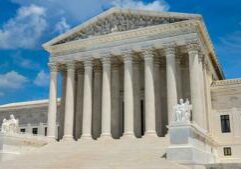
Supreme Court to hear migrant parole case Wednesday
The U.S. Supreme Court will begin its final oral arguments sitting of the current term on Monday. The justices will hear several high profile arguments on various issues before the term ends in June.
On Wednesday, justices will hear arguments in Blanche v. Lau, a case to determine how immigrants are admitted into the United States. The case focuses on Muk Choi Lau, a Chinese national who became a lawful permanent resident in the United States in 2007. In 2012, Lau was convicted of trademark counterfeiting in New Jersey and fled the country.
However, once Lau returned, immigration officers admitted him under parole, a status that allowed him to be brought into the United States but not to remain permanently.
“It’s kind of a catch-all way that DHS officers can allow someone into the country,” said James Rogers, senior counsel at America First Legal.
Once Lau returned to the country on parole, the U.S. Department of Homeland Security began removal proceedings to take Lau out of the country. According to the Immigration and Nationality Act, an immigrant admitted on parole is required to prove that they are admissible into the United States.
“It’s a lot easier to remove an alien in that sort of situation,” Rogers said.
The justices will hear arguements over whether the government had to establish clear evidence when Lau returned to the United States that he had committed a crime or if his later conviction proved that point. The justices will also likely decide how much authority federal courts have when reviewing parole determinations.
Lawyers for Lau argued that the United States cannot use charges of a crime to make a determination on how an immigrant can enter the United States.
“No one thinks that a pending criminal charge is clear and convincing evidence that the defendant committed the charged crime,” lawyers for Lau wrote. “To the contrary, criminal charges are not evidence at all.”
Rogers said the court’s decisionmaking process in this case will be important because the Biden administration used parole to allow immigrants into the country. The Center for Immigration Studies estimated the Biden administration granted parole to 2.86 million foreign nationals.
“The parole statute is supposed to only allow a narrow exception where a DHS officer is allowed to admit aliens on a case-by-case basis if the DHS officer determines that there’s a significant humanitarian need or significant national benefit to letting the alien in,” Rogers said.
Rogers warned that the Supreme Court’s definition of federal review with parole designations could have a large impact on future administrations. He said Democrat administrations could allow large numbers of immigrants in on parole without needing to review the decision in court.
“This can make it significantly harder in the future to challenge left-wing administrations attempts to open the borders and use parole again to let in aliens because there would be no review of those decisions in court,” Rogers said.




Sunny
Latest News Stories

Litchfield Secures Marshalls Department Store with New TIF Agreement
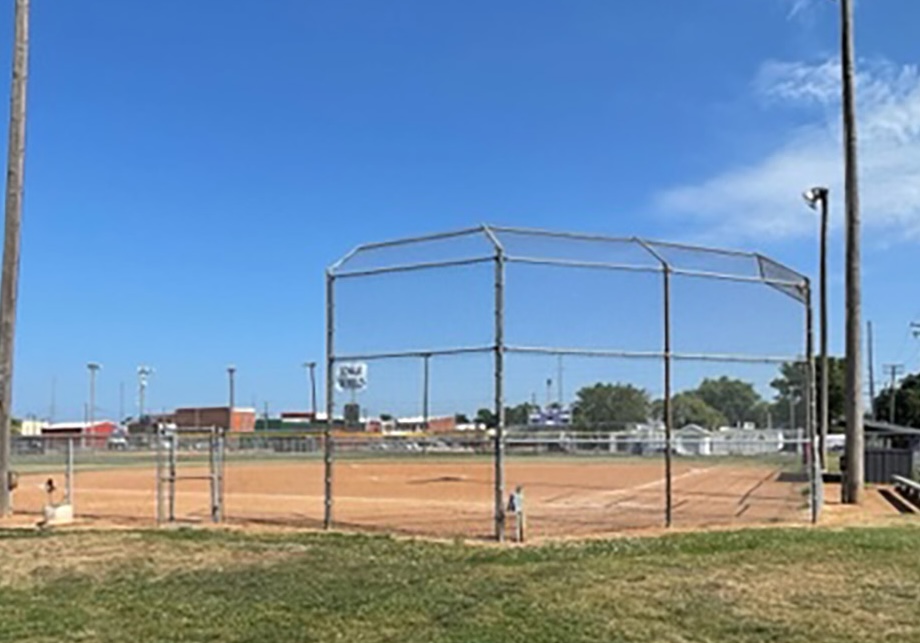
LBI Proposes Expansion of Schalk Field at Park Board Meeting
Litchfield Approves $397k for Emergency Water Plant Repairs; Resident Donates $100k to Cause
Litchfield Park Board Approves 5% Tax Levy Increase

Meeting Summary and Briefs: Litchfield CUSD 12 for October 21, 2025
Principals Present Improvement Plans Focused on Growth and Attendance
Litchfield Board Approves Strategic Planning Contract and Truck Driver Training Site
Litchfield School Board Accepts Clean Financial Audit; Auditors Advise Monitoring Benefit Funds
Meeting Summary and Briefs: Litchfield City Council for Oct. 16, 2025
Litchfield Approves Contract for State-Funded Auto Theft Task Force Inspector

Council Rejects Water Bill Credit for Mt. Olive, Citing Fairness to Local Residents
Litchfield Council Authorizes $183K in Emergency Water Plant Repairs Following System Failure