
Fewer businesses of Illinois’ diversity-preferred group got state contracts last year
(The Center Square) – Fewer businesses that get diversity-related government priority in Illinois are getting contracts with the state, according to a new annual report from the agency, after a long-running computer problem thwarted efforts to increase those contracts.
About 1,500 businesses that are owned by racial minorities, women and people with disabilities were paid by the state for construction and other service contracts in this past fiscal year.
That figure — contained in the Illinois Commission on Equity and Inclusion’s recent annual report — is a 9-percent decrease from the prior year. And it happened even though state lawmakers have devoted millions of dollars in recent years to support the businesses.
Lawmakers created the commission in 2022 and pay each of its seven governor-appointed commissioners about $150,000 annually. They also have a staff of about 30. The Center Square has found that the commissioners meet less frequently and are paid more than other state board members, take no votes of consequence, and that some work side jobs for pay.
Further, they oversaw a switch to a new computer system that for more than a year has reduced the number of the businesses that get help navigating the state’s contracting processes and are prioritized for contract awards.
One of the commission’s primary tasks is to increase the number of businesses that are certified as majority-owned by people from groups the state has deemed to be disadvantaged.
Yet, that number has plummeted. The annual report noted a total of 2,869 certified businesses at the end of the 2025 fiscal year, in June. That is roughly half of its peak and is less than when the commission formed.
Despite the precipitous decrease in certifications, the commission noted an increase in the total dollars spent with the remaining businesses for the past fiscal year, which was about $1.6 billion. But the money went to fewer businesses.
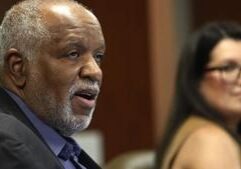
“While the number of diverse contracts dipped from the prior year, the report shows meaningful progress in where the dollars are going,” the commission’s executive director, Alexandria Wilson, said in a recent meeting.
She noted high contract amounts for architectural, engineering and computer services.
Overall goal reduced
State leaders have sought to award between 20% and 30% state contract money to the certified businesses.
The commission reported significant progress toward those percentage goals for the last fiscal year, but it was largely driven by a massive reduction in the money that is subject to the goals.
While the state’s total spending eclipses $100 billion each year, the commission determined that only about $15 billion of last year’s spending should be measured for compliance.
Contracts can be exempted from the goals if the pool of certified businesses that might compete for them is too small.
The total eligible money — known as the “dollars subject to goal” — for 2025 was less than half of the total for 2024. Consequently, the percentages used to track progress more than doubled.
The commission reported that about 11% of eligible money was spent with certified businesses in 2025, up from about 4% in 2024.
The commission’s annual report does not specifically address why the total dollars subject to goal decreased so dramatically for 2025. It noted that the commission used a “revised formula” to differentiate between construction and non-construction projects, which have different goals under state law. And the commission also required each agency to input the data into a form to calculate the figures, which was a change from last year’s procedure.
Wilson, the executive director, did not respond to a request from The Center Square to explain how the formula changed and how the change might have affected the goals.
In a recent meeting, Commissioner Bruce Montgomery described the reduction as “a tremendous improvement in the area of dollars subject to goal. That is a win for this community.”
He did not respond to a request to clarify why he considers the large reduction to be an improvement. None of the commissioners have responded to The Center Square’s interview requests in recent months.
Funding for the commission is expected to be the subject of a state Senate committee hearing on Wednesday. Lawmakers have proposed about $5.6 million for the commission for the next fiscal year.




Sunny
Latest News Stories
Signature process begins to ban large data centers in Ohio

U.S. Supreme Court agrees to hear veteran’s benefits challenge
Supreme Court declines to hear challenge to Illinois public transport gun ban

Illinois Quick Hits: Report says Pekin Bowling Center ‘taxed out of business’
Tiffany vows to end subsidies for data centers in Wisconsin
Roads & Bridges Committee Approves Over $120,000 for Local Bridge Infrastructure
Litchfield Approves 2026-2027 Student Fees, Mandates Shot Clock Workers in New Officials Pay Scale

Firefighter age bill stalled despite union backing

Williamsville’s Explosive Offense Overwhelms Litchfield in 16-0 Tournament Shutout
Finance and Budget Committee Reaps $11,444 Premium Refund, Shifts Administrative Expenses
Rochester’s Early Offensive Surge Overwhelms Litchfield in 10-0 Shutout

Lawmaker criticizes surplus spending bill
Clark’s Homer and Lurkins’ Shutout Power Greenville Softball Past Litchfield 15-0

Development Committee Advances Wind and Solar Ordinance Updates Amid Public Scrutiny