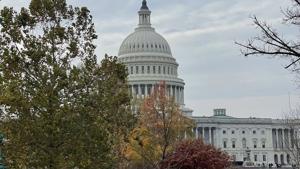

Congress passes FISA Section 702 stopgap after 18-month extension fails in House
The U.S. Senate has adopted the House’s 10-day extension of the expiring Section 702 of the Foreign Intelligence Surveillance Act, leaving Republican leadership less than two weeks to win over hardliners.
House Speaker Mike Johnson, R-La., had spent the past week attempting to persuade enough House Republicans to reauthorize the controversial federal spy power, which was set to expire April 20.
But in a remarkable show of rebellion, 12 House Republicans helped Democrats tank a five-year extension that included minimal reforms in a series of Thursday night and Friday morning votes.
A last-ditch vote around 1:30 a.m. to advance the originally proposed clean 18-month extension failed by an even greater margin, with 20 Republicans opposing it.
Johnson could only get lawmakers to agree to a short-term extension, which passed the lower chamber by unanimous consent and then unanimously passed the Senate Friday morning.
“We were very close tonight. There’s some nuances with language and questions that need to be answered, and we’ll get it done. The extension allows us the time to do that,” Johnson told reporters after the votes.
“[W]hat we’re trying to do is thread the needle of ensuring that we have this essential tool to keep Americans safe but also safeguard our Constitutional rights and making sure that the abuses of FISA in the past are no longer possible,” he added.
“There are many different opinions on how to do it and it’s very difficult to make it perfect, but we’ll get it done.”
Section 702 of the Foreign Intelligence Surveillance Act allows federal intelligence agencies to conduct warrantless electronic surveillance on foreign nationals of suspicion.
But the electronic data of American citizens – including emails, text messages, and phone calls – are routinely collected as well.
The major controversy lies in the fact that federal intelligence agents will routinely search through that database without obtaining a warrant, which many critics view as a violation of Americans’ Fourth Amendment Rights.
Declassified government documents and oversight reports show that federal intelligence agencies have performed millions of these so-called “backdoor searches” since FISA Section 702 was created, including 57,000 in 2023 alone.
So far, Republican holdouts on reauthorizing the provision have indicated they will accept nothing less than an extension that includes a ban on backdoor searches.
“Warrantless backdoor surveillance of American citizens is happening under FISA Section 702 – and that’s wrong. We must defend Americans’ constitutional right to privacy under the Fourth Amendment and fix FISA,” Rep. Keith Self, R-Texas, posted on X Friday.
“We’ve got 10 days to do it. Let’s get it done.”





Sunny
Latest News Stories

BlackRock summit to focus on workforce needed for U.S. infrastructure boom

Debate grows as states consider teacher strike bans

American gasoline prices increase most in one week since 2020

Presidents, governor honor late civil rights leader Jackson; mayor says tax the rich

Illinois Quick Hits: Rockford sex abuse suspect arrested

Lawmakers concerned over taxpayer burden of Iran conflict

Pritzker pushes back on Megaproject tax concerns

Measles spreads across some Southwestern states
EXCLUSIVE: Inside one Michigan town’s fight against solar expansion

Trump demands unconditional surrender from Iran, mentions regime change

Illinois pols react to Homeland Security secretary’s exit, reassignment

Illinois quick hits: Appeals court vacates use of force injunction; Charges filed for possession of sex abuse materials; Gas prices keep rising

U.S. cut 92,000 jobs in ‘dismal’ February report, unemployment 4.4%