
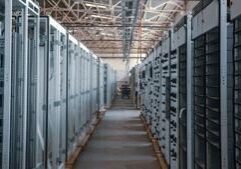
Lawmakers hear debate over data centers including revenue, headaches
(The Center Square) – With more than 100 new data center projects moving forward across Illinois in recent years, and thousands across the country, Illinois lawmakers heard about how the facilities are affecting local residents and town finances.
During an investigative hearing Wednesday, state representatives heard from multiple local government leaders that have data centers in their areas, speaking to some of the positive and negative impacts for some impacted residents.
DeKalb Mayor Cohen Barnes said a Meta data center in his city – which began operating in 2023 – has allowed for significant tax relief to residents while still bringing in significantly more money for local bodies.
He said local aggregate tax rates have dropped from 11.5% to 7.9% since the data center project began.
“As we all know, the most significant property tax generator or consumer is the school district. Our DeKalb school district, because of Meta alone, has $19 million a year more added to their levy while being able to reduce the tax rate every single solitary year,” Barnes said.
Aurora Mayor John Laesch said his city has also benefitted from data center investment financially, but there have also been some downsides.
“For the benefits, it is true that data centers bring revenue. In Aurora, that will mean approximately $1.6 million annually in both property and utility taxes to the city each and every year,” Laesch said.
Laesch told the committee residents are concerned with power consumption amid rising rates in the region. He also mentioned a lesser-discussed complaint he’s received: Noise pollution.
“Aurora residents living near data centers have described a constant low-frequency hum day and night. It’s not loud in a traditional sense, but persistent. People have described trouble sleeping, increased stress, a loss of quiet in their own homes,” Laesch said.
Rep. Dan Ugaste argued that it’s inconsistent for suburban residents to cite noise concerns when his rural constituents report that renewable energy projects, which the mayor said he supports, like wind turbines, create a similar hum.
Laesch told the representative that complex state regulations on noise pollution make it hard to restrict the noise, and changes could help limit the acceptable amount of sound in both settings.
Former Sangamon County Board Representative Marc Ayers spoke on his experience firsthand hearing from community members about a highly debated proposed CyrusOne data center southwest of Springfield.
“It was predominantly activists that were opposed, but also the unions that were there in support. It was a contentious debate,” Ayers said. ”I think that more information still needs to come out about what data centers are, how much energy are they using on a year-to-year basis. I think that’s something that we’d like to know locally.”
Ayers voluntarily stepped down from his seat this week, completing his role after a hearing on a proposed data center Tuesday. Though Ayers voted against it, the board passed zoning changes allowing the data center to move forward.
The hearing was the first in a series the committee plans to conduct on data centers, with the next hearing expected to take place next Wednesday. The lawmakers hope the hearings will help inform future legislation on the ever-growing industry.






Mostly Cloudy then Slight Chance Rain Showers
Latest News Stories

Chicago aldermen discuss delayed payments, cash flow issues

Ex-COPA deputy who revealed boss’ anti-cop bias can’t sue over firing

Deadline approaches for Colorado River negotiations

California Assembly OKs $90M bill for Planned Parenthood
Massie doubles down on calls for Lutnick to resign

Seahawks’ Super Bowl win temporarily jolts local Seattle economy

Next oil and gas lease sale for U.S. Gulf scheduled for March

Lawsuit demands Pritzker’s office release docs over pic with criminal

Pritzker announces bond expansion, says progress has been made with Bears

Illinois Quick Hits: Statewide bag tax proposed

Pacific Palisades continues to rebuild one year after fire
Report: U.S. added nearly $700 billion to national debt in four months