Groups warn Middle East truce may not ease economic fallout
The International Monetary Fund and the World Bank Group are closely watching the tentative truce between the U.S. and Iran in the Middle East, but warned of economic fallout, especially for food prices.
The International Monetary Fund and World Bank warnings show the conflict has a global impact. Energy and food prices are rising. Economies, especially import-dependent ones, are strained. As leaders try to control the crisis, ordinary people and businesses face higher costs and uncertainty.
Leaders of the IMF, the World Bank Group and the World Food Program issued a joint statement on Wednesday saying they are ready to help.
Leaders from the three organizations met on Wednesday to talk about how the conflict could affect the global economy and food security.
“The Middle East war is upending lives and livelihoods in the region and beyond. It has already triggered one of the largest disruptions to global energy markets in modern history,” the statement said. “Sharp increases in oil, gas, and fertilizer prices, together with transport bottlenecks, will inevitably lead to rising food prices and food insecurity.”
The groups said these consequences will fall “heavily on the world’s most vulnerable populations, particularly in low‑income, import‑dependent economies.”
“Spikes in fuel prices and potential sharp increases in food prices are especially concerning where fiscal space is constrained and debt burdens are already high, reducing governments’ ability to protect vulnerable households,” the joint statement said.
“Our institutions will continue to monitor developments closely and coordinate the use of all available tools to support those impacted by the crisis,” the groups said.
Prior to the two-week ceasefire agreed to late Tuesday, Trump had been threatening to destroy all of Iran. The ceasefire deal requires Iran to reopen the Strait of Hormuz, the crucial waterway that carries about 20% of the world’s oil and natural gas.
Since the conflict began at the end of February, U.S. gas prices have climbed about $1 per gallon. The national average has recently reached $4 per gallon.
The ongoing conflict with Iran has pushed oil prices to record highs. If it continues, experts warn that economic strain will grow, further affecting U.S. taxpayers.
U.S. military operations, ongoing since late February, are costing an estimated $1 billion per day. Analysts have noted that if the conflict continues for an extended period, it could drive a significant increase in defense spending and further impact the federal budget.
The Department of War may ask Congress for an additional $200 billion for Iran operations. It has not yet provided exact figures for a supplemental request.
Last week, Trump unveiled a 2027 budget proposing a 44% increase in military spending to bolster the nation’s fighting forces. That would bring the U.S. defense budget to $1.5 trillion, if approved by Congress.
On Febr. 28, after nuclear talks with the Islamic Republic failed to produce a deal, the U.S. and Israel launched strikes on Iran.






Sunny
Latest News Stories

Buildings & Grounds Committee Recommends HVAC Maintenance Pacts, Hears Property Grievances

Mielke Dominates in the Circle and at the Plate as Litchfield Routs Marquette Catholic 14-4

Trump endorses Hilton in California gubernatorial primary

Feds award $1M for Rose Bowl upgrade ahead of Olympics

Trump defends Section 122 in latest tariff legal challenge
Education department rescinds Title IX resolution agreements

Illinois gun owners plan rally in wake of Supreme Court order

Artemis II mission breaks records Monday as astronauts observe far side of the moon

Illinois quick hits: Illinois House speaker’s son to attend private school; AFSCME workers set strike date at Illinois State University; IDOT urges public to avoid distracted driving
Federal-state showdown looms over regulation of prediction markets

No-knock warrant legislation brings Chicago victim, Illinois gun group together
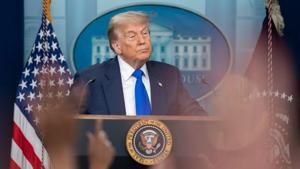
Trump promises ‘complete demolition’ in Iran as deadline looms