
U.S. Supreme Court rules against automatic prison release punishments
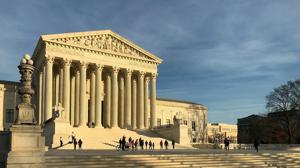
The U.S. Supreme Court, in an 8-1 decision, decided an individual on supervised release is not automatically extended when that person absconds from their release.
The case, Rico v. US, focuses on Isabel Rico who absconded her supervised release while she was on probation after being detained in federal prison. During her probation period, Rico was convicted of a state drug offense.
A judge charged her with time in prison and several months of supervised release.
Justices on the court said Rico cannot be automatically considered for an extension of supervised release just because she violated her previous release.
“The government seeks not a rule that stops the clock or ensures a defendant takes no advantage of abscondment, but one that imposes new punishment by automatically extending supervised release,” Justice Neil Gorsuch wrote in the court’s majority opinion.
The justices argued that the Sentencing Reform Act protects Rico from automatic additional punishment, even though she absconded her supervised release.
In 1984, Congress passed the Sentencing Reform Act, which created mandatory uniform national guidelines to increase transparency and unity in federal sentencing practices.
“The Act already provides many ways to ensure defendants do not profit from violations without automatically extending the period beyond what a judge ordered,” Gorsuch wrote.
Justice Samuel Alito provided the lone dissenting opinion. He argued the Sentencing Reform Act was used by the judge to determine Rico’s punishment after she absconded supervised release.
“It seems strange to regard a crime committed after the expiration of “unsupervised supervised release” as a non-event,” Alito wrote. “By that logic, if petitioner had gone on a murder spree after the expiration of the period of unsupervised supervised release, the sentencing judge would have been required to put that out of his mind.”






Sunny
Latest News Stories

Salvation Army rehab ‘enrollees’ who work at thrift stores aren’t ‘employees’

Illinois housing affordability efforts pit tax cuts against new spending

Illinois Quick Hits: Chicago city workers owe more than $19M

Attorney expects conversion therapy ruling to impact Illinois ban

Millionaire’s tax proposal draws mixed reviews as deadline approaches

Universities warn state funding delays are wasting millions in taxpayer investment

Illinois Quick Hits: Loyola student’s alleged killer faces federal firearm charge

Meeting Summary and Briefs: Montgomery County Board for February 10, 2026

Report: Coordinated resilience infrastructure is needed in age of AI

Litchfield School Board Sets Fogleman Scholarship at $2,100 Amid Rising Student Eligibility, Reviews $10.1 Million Trust

U.S., NATO alliance on the line as Trump set to meet with Rutte

BREAKING: Trump fires Bondi, Blanche to lead DOJ