
U.S. Supreme Court rules against automatic prison release punishments
The U.S. Supreme Court, in an 8-1 decision, decided an individual on supervised release is not automatically extended when that person absconds from their release.
The case, Rico v. US, focuses on Isabel Rico who absconded her supervised release while she was on probation after being detained in federal prison. During her probation period, Rico was convicted of a state drug offense.
A judge charged her with time in prison and several months of supervised release.
Justices on the court said Rico cannot be automatically considered for an extension of supervised release just because she violated her previous release.
“The government seeks not a rule that stops the clock or ensures a defendant takes no advantage of abscondment, but one that imposes new punishment by automatically extending supervised release,” Justice Neil Gorsuch wrote in the court’s majority opinion.
The justices argued that the Sentencing Reform Act protects Rico from automatic additional punishment, even though she absconded her supervised release.
In 1984, Congress passed the Sentencing Reform Act, which created mandatory uniform national guidelines to increase transparency and unity in federal sentencing practices.
“The Act already provides many ways to ensure defendants do not profit from violations without automatically extending the period beyond what a judge ordered,” Gorsuch wrote.
Justice Samuel Alito provided the lone dissenting opinion. He argued the Sentencing Reform Act was used by the judge to determine Rico’s punishment after she absconded supervised release.
“It seems strange to regard a crime committed after the expiration of “unsupervised supervised release” as a non-event,” Alito wrote. “By that logic, if petitioner had gone on a murder spree after the expiration of the period of unsupervised supervised release, the sentencing judge would have been required to put that out of his mind.”





Sunny
Latest News Stories
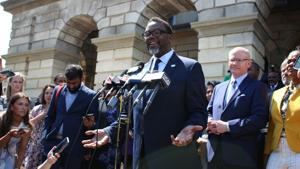
Chicago mayor defends ICE order, calls for progressive revenue from state taxpayers

Unrealized Education Department cuts cost taxpayers up to $38 million

Illinois Quick Hits: Illinois to join WHO’s alert network

GOP candidates for Illinois governor challenge Pritzker on state finances
Date set for Clintons to appear before House committee

Lawmaker says adopting federal ‘no tax on tips’ would help workers
AGs request probe into climate activists’ influence on Federal Judicial Center

Detroit judge among four charged with exploiting vulnerable adults
Govt. funding bills pass House on razor-thin margins, head to Trump’s desk

DOJ announces more arrests in St. Paul church protest, nine total

WATCH: Dems call for Noem’s impeachment, dismantling DHS

WATCH: Los Angeles area robotics team starts 25th season