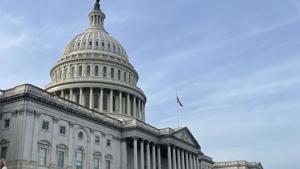

U.S. Supreme Court rules against automatic prison release punishments
The U.S. Supreme Court, in an 8-1 decision, decided an individual on supervised release is not automatically extended when that person absconds from their release.
The case, Rico v. US, focuses on Isabel Rico who absconded her supervised release while she was on probation after being detained in federal prison. During her probation period, Rico was convicted of a state drug offense.
A judge charged her with time in prison and several months of supervised release.
Justices on the court said Rico cannot be automatically considered for an extension of supervised release just because she violated her previous release.
“The government seeks not a rule that stops the clock or ensures a defendant takes no advantage of abscondment, but one that imposes new punishment by automatically extending supervised release,” Justice Neil Gorsuch wrote in the court’s majority opinion.
The justices argued that the Sentencing Reform Act protects Rico from automatic additional punishment, even though she absconded her supervised release.
In 1984, Congress passed the Sentencing Reform Act, which created mandatory uniform national guidelines to increase transparency and unity in federal sentencing practices.
“The Act already provides many ways to ensure defendants do not profit from violations without automatically extending the period beyond what a judge ordered,” Gorsuch wrote.
Justice Samuel Alito provided the lone dissenting opinion. He argued the Sentencing Reform Act was used by the judge to determine Rico’s punishment after she absconded supervised release.
“It seems strange to regard a crime committed after the expiration of “unsupervised supervised release” as a non-event,” Alito wrote. “By that logic, if petitioner had gone on a murder spree after the expiration of the period of unsupervised supervised release, the sentencing judge would have been required to put that out of his mind.”






Sunny
Latest News Stories
Illinois Quick Hits: FEMA says no to Illinois disaster declaration

West Virginia law enforcement leading in ICE Task Force Model partnership

U.S. House probes Michigan noncitizen voting claims

Chicago aldermen discuss delayed payments, cash flow issues

Ex-COPA deputy who revealed boss’ anti-cop bias can’t sue over firing

Deadline approaches for Colorado River negotiations

California Assembly OKs $90M bill for Planned Parenthood

Massie doubles down on calls for Lutnick to resign

Seahawks’ Super Bowl win temporarily jolts local Seattle economy

Next oil and gas lease sale for U.S. Gulf scheduled for March

Lawsuit demands Pritzker’s office release docs over pic with criminal
Pritzker announces bond expansion, says progress has been made with Bears