
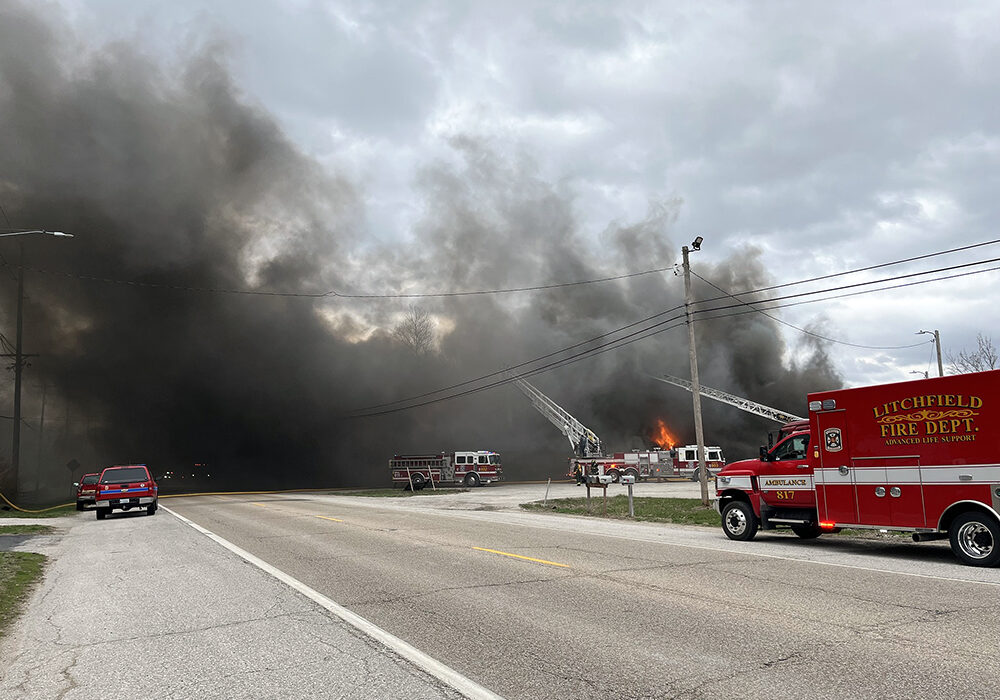
Litchfield Bowling Alley Destroyed in Massive Second-Alarm Blaze; Mutual Aid Prevents Spread During High Winds
Article Summary: A Sunday afternoon fire completely destroyed the Litchfield Bowling Alley on March 15, requiring a massive second-alarm response from over a dozen agencies to prevent the flames from spreading to neighboring homes amid 40 mph wind gusts.
Litchfield Bowling Alley Fire Key Points:
-
Firefighters transitioned to a defensive strategy immediately due to a known structural hazard involving “chicken wire” and insulation that posed a collapse risk to crews.
-
Extreme weather conditions, including 25 mph sustained winds and a passing thunderstorm, created “spot fires” in nearby hayfields and pushed flames toward residential properties.
-
A rural water supply operation involving five tenders was established after the heavy demand for water overwhelmed the city’s distribution system.
-
The building, located at 3320 IL Route 16, is considered a total loss, though no injuries were reported among civilians or emergency responders.
On Sunday, March 15, 2026, the Litchfield Fire Department and multiple mutual aid partners battled a wind-driven commercial fire that leveled the Litchfield Bowling Alley. The blaze, which began at approximately 2:15 p.m., was described by City of Litchfield Mayor Jacob Fleming as a “minor miracle” because it did not consume neighboring homes or fields despite severe weather conditions.
The incident began when a neighbor to the east spotted smoke and called 911. A Litchfield firefighter who lives near the 3320 IL Route 16 facility arrived ahead of the apparatus and reported heavy smoke pouring from the Alpha-Delta corner of the structure. Upon the arrival of Engine 810, Acting Chief Chad Drew (serving as Acting Captain 801) observed dark yellow smoke—a sign of a deep-seated fire—and noted that the roof was already involved.
Tactical Decisions and Structural Hazards
Acting Chief Drew made the critical tactical decision to keep all firefighters out of the interior of the building. Fire Chief Adam Pennock later praised this move, noting the building possessed a known safety hazard: chicken wire used to hold up attic insulation. Officials explained that if the roof had failed during an interior attack, the wire and insulation could have collapsed, fatally trapping crews inside.
“The wind was so strong that day. It was 25 mph sustained winds at the time of the fire, gusting upwards of 40,” Chief Pennock reported. “The fireball at one time was almost to the house across and to the west of the fire. We had spot fires happening in the hayfield.”
Scaling the Response
As the fire intensified, the alarm was upgraded to a Box Alarm and eventually a 2nd Alarm for engines only. Crews initially deployed 2 1/2-inch and 1 3/4-inch hoselines to protect a neighboring garage and other exposures on the “Charlie” side of the building.
Truck 803 attempted vertical ventilation from its bucket, but the roof began to sag significantly in the center and the structure eventually self-vented due to a roof collapse. Once the collapse occurred, Truck 803 and the Raymond-Harvel Fire Department’s Ladder 503 began flowing massive amounts of water from above the fire.
Water Supply and Coordination
The suppression effort required upwards of 2,000 gallons of water per minute. The heavy draw on the city’s water distribution system eventually led to a drop in pressure, making it difficult for Witt Ladder 307 to maintain a sufficient stream. Command responded by requesting five tenders and establishing a rural water supply operation. Witt Water Supply Officer Donnie Kaiser coordinated the tender shuttle to ensure the ladder trucks remained operational.
The coordination of the fireground involved several specialized roles:
-
Staging: Managed by Carlinville Fire Protection District Chief Justin Key (1200).
-
Charlie Division: Overseen by Litchfield Captain 823, focusing on exposure protection.
-
Safety Officer: Litchfield Captain 827 was assigned to monitor the bowing walls and shifting wind conditions.
-
Demolition: The Litchfield Street Department utilized a backhoe to pull down a compromised wall on the “Alpha” side, allowing crews better access to the seat of the fire.
Aftermath and Investigation
While the building is a total loss, the combined efforts of the mutual aid departments—including Gillespie, Mt. Olive, Hillsboro, Taylor Springs, Coffeen, Nokomis, and Shoal Creek—prevented the fire from extending to any other structures. Off-duty personnel, including Dave Rogers, reportedly rushed back from as far as Wood River to assist in the effort.
Ameren Gas and Electric crews arrived during the height of the fire to disconnect services. The Litchfield Police Department monitored the site through the night to watch for rekindles beneath the metal roof structure.
The cause and origin of the fire are currently under investigation by the Illinois Office of the State Fire Marshal. Authorities are asking anyone with information related to the start of the blaze to contact the Litchfield Police Department.
Community members also contributed to the response, helping to retrieve food donated by the local McDonald’s for the dozens of responders who remained on the scene for several hours.
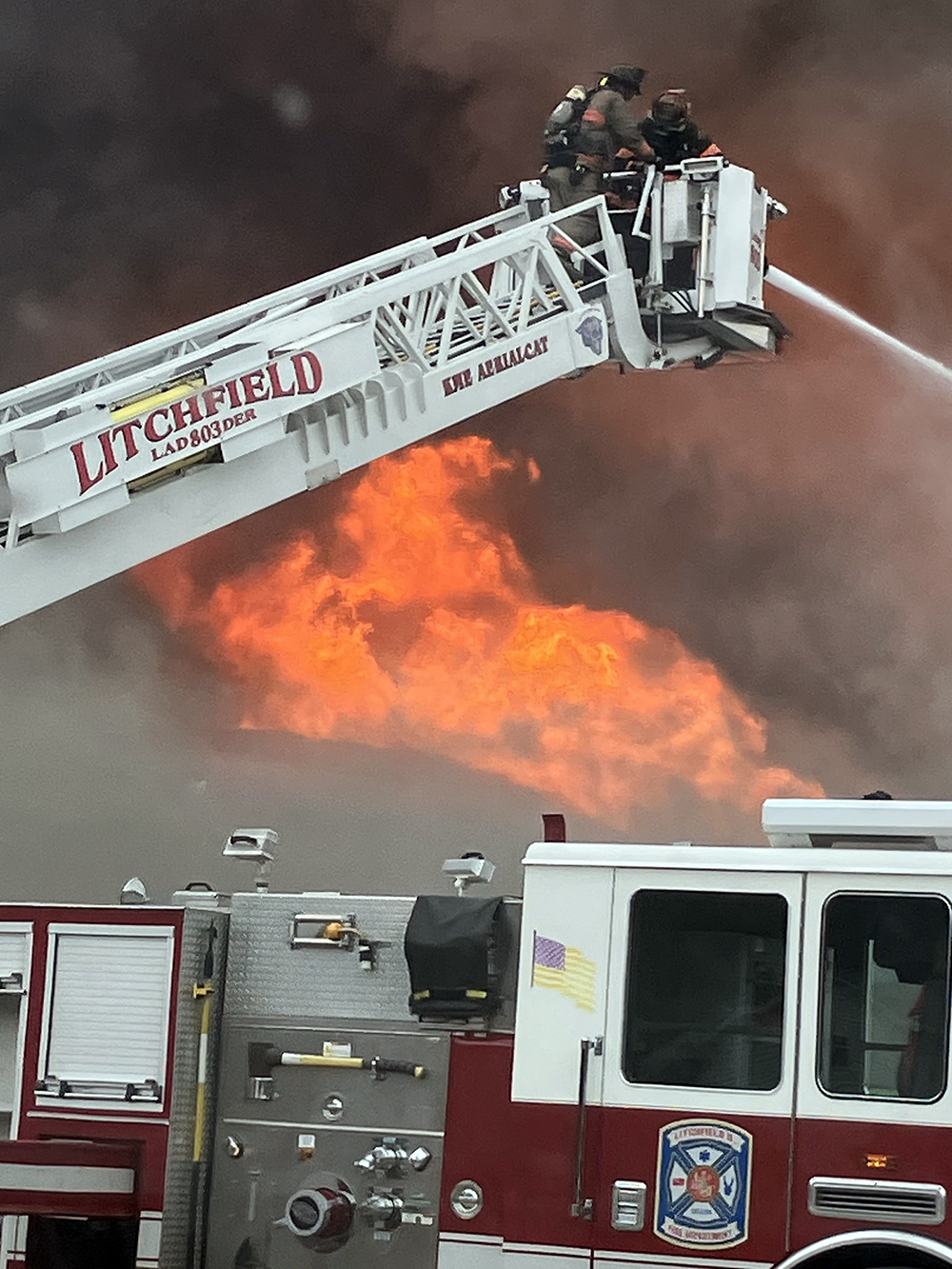
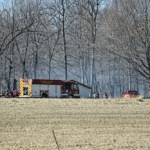
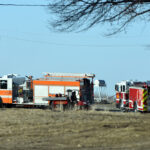
Photo courtesy of Litchfield Fire Department
Mostly Sunny
Latest News Stories

Tiffany vows to end subsidies for data centers in Wisconsin

Roads & Bridges Committee Approves Over $120,000 for Local Bridge Infrastructure
Litchfield Approves 2026-2027 Student Fees, Mandates Shot Clock Workers in New Officials Pay Scale
Firefighter age bill stalled despite union backing

Finance and Budget Committee Reaps $11,444 Premium Refund, Shifts Administrative Expenses

Lawmaker criticizes surplus spending bill

Development Committee Advances Wind and Solar Ordinance Updates Amid Public Scrutiny

Litchfield School District Joins Mississippi Valley Property Casualty Cooperative for Insurance Coverage

Salvation Army rehab ‘enrollees’ who work at thrift stores aren’t ‘employees’

Illinois housing affordability efforts pit tax cuts against new spending

Illinois Quick Hits: Chicago city workers owe more than $19M

Attorney expects conversion therapy ruling to impact Illinois ban