
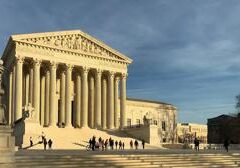
Groups file brief in support of ending post-Election Day ballot counting
Four election integrity groups filed an amicus brief in support of a case that requests the U.S. Supreme Court not allow state laws that permit counting ballots arriving after Election Day, with experts saying that the recent normalization of late ballots negatively affects trust in and efficiency of elections.
Executive Director of Honest Elections Project Jason Snead told The Center Square that “this case is nothing more than a return to the norm and an enforcement of federal law against a novel scheme that illegally extends elections beyond Election Day.”
Late arriving ballots “[erode] confidence in the outcome,” and “mean that election results are delayed,” Snead said.
“We have seen long delays in declaring a winner and instances where late arriving ballots change the outcome,” Snead said.
Honest Elections Project was joined by the American Legislative Exchange Council (ALEC), the Center for Election Confidence (CEC), and Restoring Integrity and Trust in Elections (RITE) in filing the amicus brief in Watson v. Republican National Committee.
Snead told The Center Square that the case “is about a conflict between federal and state law.”
“Federal law sets Election Day,” Snead said. “The question for the court is whether accepting late ballots extends or alters Election Day.”
“A ruling in favor of the RNC would increase confidence in the outcome of elections,” Snead said.
Snead additionally told The Center Square that “routine, widespread mail voting only began in the last few decades, and laws accepting late ballots are even newer.”
“Thirty-six states do not allow late ballots, and historically that has been the norm,” Snead said. “Of the fourteen that allow late ballots, half only began during COVID, an emergency that has long since ended.”
President of RITE Justin Riemer told The Center Square that his organization is “pleased to stand alongside the Center for Election Confidence, Honest Elections Project, and ALEC in urging the Court to uphold the straightforward meaning of federal law.”
“The federal Election Day deadline isn’t just a legal mandate, it’s essential for maintaining order and building public trust in our elections,” Riemer said.
ALEC CEO Lisa B. Nelson told The Center Square that “federal law concerning Election Day is clear, and states have no obligation to continue to count ballots well beyond the close of polls.”
“If states want to ensure more confidence in their elections, ALEC’s model policy, the Deadline for Return and Receipt of All Ballots Act, is a good starting point,” Nelson said.
“ALEC is proud to stand with its partners on this important principle,” Nelson said.





Mostly Cloudy then Slight Chance Rain Showers
Latest News Stories

Measles spreads across some Southwestern states
EXCLUSIVE: Inside one Michigan town’s fight against solar expansion
Trump demands unconditional surrender from Iran, mentions regime change

Illinois pols react to Homeland Security secretary’s exit, reassignment

Illinois quick hits: Appeals court vacates use of force injunction; Charges filed for possession of sex abuse materials; Gas prices keep rising

U.S. cut 92,000 jobs in ‘dismal’ February report, unemployment 4.4%
Litchfield City Council Approves Emergency Water Plant Repairs, Pursues Federal Grants for $4.6 Million Overhaul
Turmoil in Texas: Concerns for Paxton to drop out, Gonzales drops reelection bid

HHS and DOC announce nutrition education initiative for medical schools

Target sued for checking arrest records of new hires: Class action

Farm bill, with changes, heads to U.S. House for vote

Agency improves license processing times; PA leader calls for modernization