
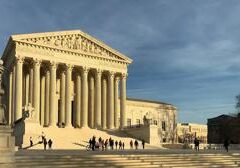
Groups file brief in support of ending post-Election Day ballot counting
Four election integrity groups filed an amicus brief in support of a case that requests the U.S. Supreme Court not allow state laws that permit counting ballots arriving after Election Day, with experts saying that the recent normalization of late ballots negatively affects trust in and efficiency of elections.
Executive Director of Honest Elections Project Jason Snead told The Center Square that “this case is nothing more than a return to the norm and an enforcement of federal law against a novel scheme that illegally extends elections beyond Election Day.”
Late arriving ballots “[erode] confidence in the outcome,” and “mean that election results are delayed,” Snead said.
“We have seen long delays in declaring a winner and instances where late arriving ballots change the outcome,” Snead said.
Honest Elections Project was joined by the American Legislative Exchange Council (ALEC), the Center for Election Confidence (CEC), and Restoring Integrity and Trust in Elections (RITE) in filing the amicus brief in Watson v. Republican National Committee.
Snead told The Center Square that the case “is about a conflict between federal and state law.”
“Federal law sets Election Day,” Snead said. “The question for the court is whether accepting late ballots extends or alters Election Day.”
“A ruling in favor of the RNC would increase confidence in the outcome of elections,” Snead said.
Snead additionally told The Center Square that “routine, widespread mail voting only began in the last few decades, and laws accepting late ballots are even newer.”
“Thirty-six states do not allow late ballots, and historically that has been the norm,” Snead said. “Of the fourteen that allow late ballots, half only began during COVID, an emergency that has long since ended.”
President of RITE Justin Riemer told The Center Square that his organization is “pleased to stand alongside the Center for Election Confidence, Honest Elections Project, and ALEC in urging the Court to uphold the straightforward meaning of federal law.”
“The federal Election Day deadline isn’t just a legal mandate, it’s essential for maintaining order and building public trust in our elections,” Riemer said.
ALEC CEO Lisa B. Nelson told The Center Square that “federal law concerning Election Day is clear, and states have no obligation to continue to count ballots well beyond the close of polls.”
“If states want to ensure more confidence in their elections, ALEC’s model policy, the Deadline for Return and Receipt of All Ballots Act, is a good starting point,” Nelson said.
“ALEC is proud to stand with its partners on this important principle,” Nelson said.





Sunny
Latest News Stories
Supreme Court reverses $1B copyright lawsuit

U.S. Supreme Court rules against automatic prison release punishments
State Police address FOID, cyber security audit findings

Poll: Trump demonstrates stronger cognitive, communication skills compared to Biden
Illinois Quick Hits: Red Line funds ordered to be unfrozen

EXCLUSIVE: 5 years in, Operation Lone Star seizes 870 million lethal doses of fentanyl

Proposal to decrease reliance on paper documents passes House

Mielke Strikes Out Nine, But Defensive Miscues Cost Litchfield Softball in 7-1 Loss to Taylorville

Flawless Defense and Saathoff’s Arm Lift Litchfield Past Taylorville, 3-2

Chicago can’t ditch airlines’ suit vs ‘disruptive’ paid sick leave rules

FEMA says funding debate didn’t affect response to Hawaii

Maryland Supreme Court tosses Blue cities’ climate lawsuits against energy companies