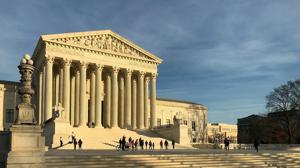

Union faces federal worker’s suit over seized dues
(The Center Square) – National Right to Work Foundation Vice President Patrick Semmens is calling out AFSCME Council 31 union leaders over what he sees as the organization’s underhanded way of doing business after a federal worker recently filed suit, alleging she was forced to join the union and pay dues that cover the organization’s political activities.
Represented by NRWF attorneys, J. Denise Bradley, a mental health professional with University Correctional Healthcare Solutions, recently took action at the National Labor Relations Board. Semmens adds Bradley is primarily staffed at the Illinois Youth Center Pere Marquette in Grafton.
“This is a case where the union is illegally, unlawfully and pretty clearly violating the rights of someone who they claim to represent,” Semmens told The Center Square. “I think union bosses really, especially when they have force dues powers, feel like they don’t actually work for their members. Basically, their business model when it comes to force dues is legalized extortion. This is a, it’s a big problem and it’s especially a problem in states like Illinois that don’t have right to work laws.
Semmens stresses this isn’t NRWF’s first issue with AFSCME Council 31leaders.
“We actually beat them at the U.S. Supreme Court in the Janice v. AFSCME 2018 case, and that case meant that every public employee in the country has a right to work protections,” he said. “Unfortunately, Denise is a private sector employee and so she does not have that full ability to cut off dues, but she’s still facing unlawful threats. A large percentage of our over 200 cases that we handle each year involve various tactics that union bosses use to attempt to get money from people in ways that they’re not legally allowed to.”
While Illinois’ non-Right to Work status allows unions to enforce contracts that require workers to pay money to the union or be fired, the Supreme Court’s decision in NLRB v. General Motors outlaws mandatory membership. Additionally, the CWA v. Beck high court verdict bans unions from requiring workers who opt out of membership to pay dues for “nonchargeable” expenses.
Not long ago, Bradley sought to exercise her right to say no but was rebuffed by union officials. Semmens argues the way union leaders continue to operate says a lot about the modern-day appeal of such organizations.
“Instead of following the law and trying to maybe convince her why we think you should voluntarily support our organization, they turn to threats and illegal threats and fundamentally she just wants that to stop,” he said. “She wants her rights to be respected and she deserves that because these are long standing precedents that the union is violating.”




Sunny
Latest News Stories

Salvation Army rehab ‘enrollees’ who work at thrift stores aren’t ‘employees’

Illinois housing affordability efforts pit tax cuts against new spending

Illinois Quick Hits: Chicago city workers owe more than $19M

Attorney expects conversion therapy ruling to impact Illinois ban

Millionaire’s tax proposal draws mixed reviews as deadline approaches

Universities warn state funding delays are wasting millions in taxpayer investment

Illinois Quick Hits: Loyola student’s alleged killer faces federal firearm charge

Meeting Summary and Briefs: Montgomery County Board for February 10, 2026

Report: Coordinated resilience infrastructure is needed in age of AI

Litchfield School Board Sets Fogleman Scholarship at $2,100 Amid Rising Student Eligibility, Reviews $10.1 Million Trust

U.S., NATO alliance on the line as Trump set to meet with Rutte

BREAKING: Trump fires Bondi, Blanche to lead DOJ