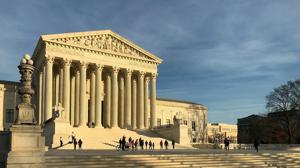

Transportation officials say a loophole closed on CDL drivers
CDL drivers causing 17 fatal crashes and 30 deaths in 2025 are no longer eligible to get a nondomiciled commercial driver’s license, according to a new rule issued by Transportation Secretary Sean Duffy.
Nondomiciled CDLs will be limited to H-2A, H-2B and E-2 nonimmigrant status holders following “enhanced interagency vetting.” Employment Authorization Documents, or an EAD, are no longer acceptable proof of eligibility. An applicant must present an unexpired foreign passport and specific Form I-94 documentation.
And, states must search the Systematic Alien Verification for Entitlements system – SAVE – to confirm lawful immigration status.
“A critical safety gap allowed unqualified drivers with unknown driving histories to get behind the wheel of commercial vehicles,” said Administrator Derek Barrs of the Federal Motor Carrier Safety Administration. “We are closing that gap today to ensure that only qualified, vetted drivers are operating on our nation’s roadways. If we cannot verify your safe driving history, you cannot hold a CDL in this country.”
The final rule will be effective 30 days after its publication in the Federal Register, a daily publication compiled by the National Archives and Records Administration and the Office of the Federal Register. The new rule is expected in publication Friday.
An emergency declaration from 2025 wound up in litigation. Congressional proposals haven’t crossed the finish line. The rule issued Wednesday, having gone through the full rulemaking process of comments and documentation for need, is expected to survive legal challenges.
“Moving forward, unqualified foreign drivers will be unable to get a license to operate an 80,000-pound big rig,” Duffy said. “Under President Trump’s leadership, we are putting the safety of the driving public first. From enforcing English language standards to holding fraudulent carriers accountable, we will continue to attack this crisis on our roads head on.”
Nondomiciled CDL drivers were cited for notable fatal crashes in the last year in Wyoming (three dead, 20 injuries), Florida (three dead), and twice in California (four dead). Significant noncompliance in CDL programs of a systemic nature has been uncovered in probes by Barr’s agency in New York, California, Pennsylvania, Minnesota, Colorado and North Carolina.
In an email to TCS, President Todd Spencer of the Owner-Operator Independent Drivers Association said, “For too long, loopholes in this program have allowed unqualified drivers onto our highways, putting professional truckers and the motoring public at risk. This final rule is a major step toward safer roads, stronger accountability, and a more professional trucking industry.”
Spencer said in addition to the cost of lives, American truckers have been robbed of jobs on home soil.
“Certain large carriers and their advocates have spent years pushing policies that expand access to cheaper labor, often at the expense of safety and professional standards,” Spencer said. “The decades old ‘driver shortage’ narrative has been used to justify lowering standards and bringing inadequately trained drivers into the industry. The result has been a steady erosion of professionalism that has made our highways less safe.”





Sunny
Latest News Stories

Salvation Army rehab ‘enrollees’ who work at thrift stores aren’t ‘employees’
Illinois housing affordability efforts pit tax cuts against new spending

Illinois Quick Hits: Chicago city workers owe more than $19M

Attorney expects conversion therapy ruling to impact Illinois ban

Millionaire’s tax proposal draws mixed reviews as deadline approaches

Universities warn state funding delays are wasting millions in taxpayer investment

Illinois Quick Hits: Loyola student’s alleged killer faces federal firearm charge
Meeting Summary and Briefs: Montgomery County Board for February 10, 2026

Report: Coordinated resilience infrastructure is needed in age of AI

Litchfield School Board Sets Fogleman Scholarship at $2,100 Amid Rising Student Eligibility, Reviews $10.1 Million Trust
U.S., NATO alliance on the line as Trump set to meet with Rutte

BREAKING: Trump fires Bondi, Blanche to lead DOJ