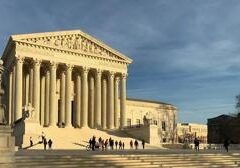
Attorneys file request to Supreme Court over gender secrecy
The Thomas More Society has filed an emergency application with the U.S. Supreme Court, requesting intervention in the Mirabelli v. Bonta lawsuit over gender secrecy policies in California schools.
Before the emergency application request, the U.S. Court for Appeals for the 9th Circuit granted California’s motion to pause the permanent injunction, stating that there was no clear evidence that the policies prevent parents from obtaining information about their children.
“California parents’ religious and fundamental parental rights — and the health and safety of their children — are too precious for them to delay seeking relief from this Court,” the emergency request stated.
The request also highlighted that the Parental Exclusion Policies directly interfere with the rights of all class member parents to direct their children’s upbringing, education, and medical treatment, as well as all plaintiffs’ First Amendment rights.
In December, U.S. District Judge Roger Benitez certified a class action lawsuit in Mirabelli v. Bonta. A few weeks later, the 9th Circuit granted California’s emergency motion for a freeze, temporarily suspending a class-wide permanent injunction against the state’s gender secrecy policies in public schools.
“The Constitution does not allow the state to replace parents or conscript teachers into deception,” Paul M. Jonna, Special Counsel for Thomas More Society and Partner at LiMandri & Jonna LLP, said. “The Supreme Court must act now.”
In addition to the Thomas More Society attorneys’ emergency request to the U.S. Supreme Court, they have also filed a request for en banc reconsideration of the 9th Circuit’s freeze order. “En banc” means an 11-judge panel from the 9th Circuit would hear the case instead of a typical three-judge panel.
The case began in April 2023, when two Escondido teachers sued the Escondido Unified School District in San Diego County, the California Department of Education and Attorney General Rob Bonta after being denied a religious accommodation from school policies. These gender policies required staff to use students’ preferred pronouns and, upon request, withhold information about a child’s gender identity from parents. Parents later joined the suit.
Event Calendar
[pdem_events format="calendar" size="xlarge" layout="stacked" exclude_category="sports,library" limit="22" debug="no"]
Latest News Stories

Everyday Economics: Existing home sales report may be noisy. Inflation will shape outlook

Illinois lawmakers weigh options to change rising property tax structure

Texodus: At least 12 Texas members of Congress won’t be returning next year

War in Iran shocks markets, costs U.S. taxpayers $1 billion a day
Mississippi primaries to watch on Tuesday

Advocates, lawmakers propose increased cigarette tax

Legal experts anticipate SCOTUS will overturn drug user gun ban
Parents’ rights advocates hail SCOTUS ruling against secret gender transitions

Critics warn Illinois bill could lead to government overreach in newborn care

Veteran suicide rate remains high despite spending millions

BlackRock summit to focus on workforce needed for U.S. infrastructure boom

Debate grows as states consider teacher strike bans